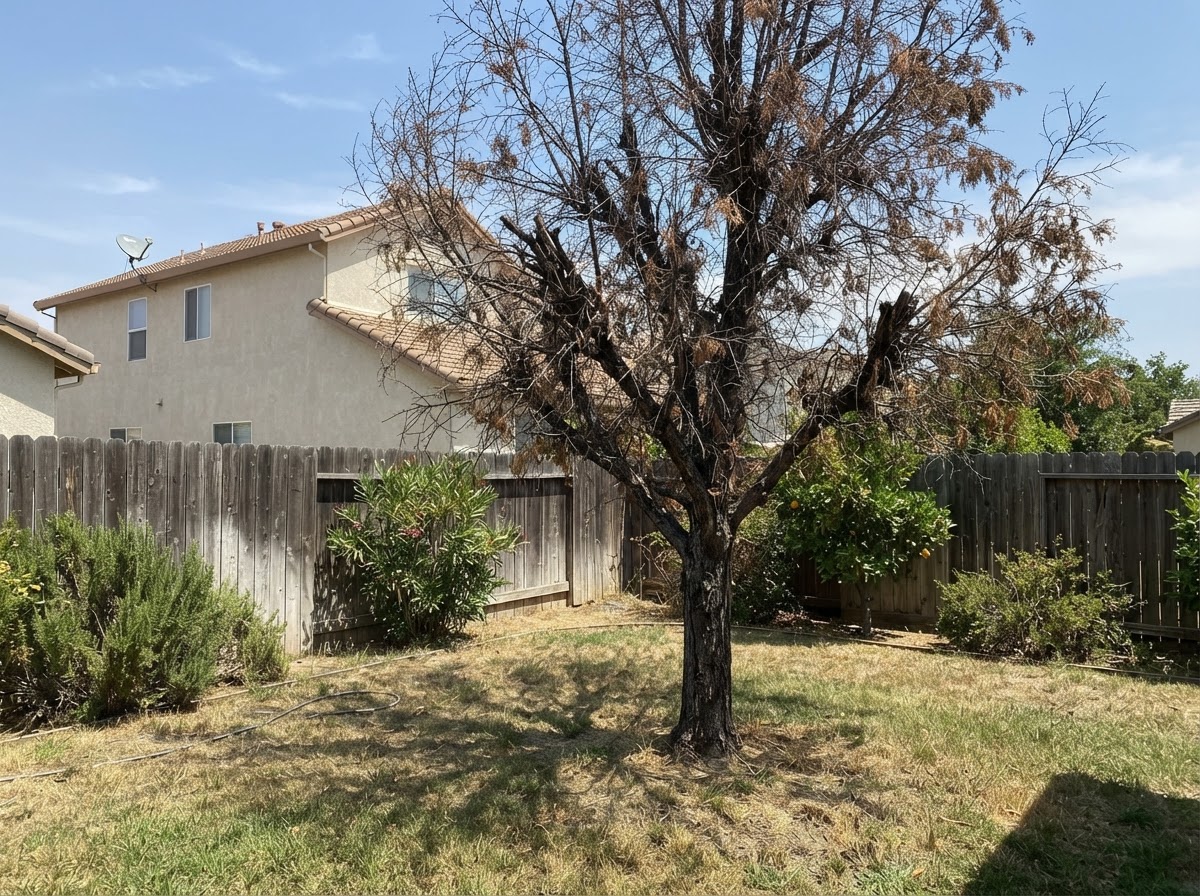
About dead tree removal
Dead tree removal takes down trees that have already died. A dead tree loses its strength over time, drops limbs unpredictably, and can become a real hazard as it deteriorates. Removing it before it fails protects the property and the people who use it.
Common reasons customers need this service
- A tree on the property has clearly died.
- Dead limbs are dropping from the canopy.
- The dead tree is near a structure, path, or play area.
- You want to remove the hazard before it fails on its own.
Typical service tasks and considerations
- Confirming the tree is dead or beyond recovery.
- Planning the safest way to bring it down.
- Removing the tree in controlled sections.
- Clearing the wood and debris from the site.
Things to consider
A tree that appears dead may simply be dormant or stressed, so it's worth confirming before committing to removal. Once a tree is truly dead, though, it only becomes more brittle and more hazardous over time, so removal is usually the safer call.
Dead Tree Removal FAQs
How can I tell if a tree is dead?
Signs include bare branches well past the growing season, bark that is peeling or falling away, brittle limbs that snap cleanly, and no new growth. A professional assessment can confirm whether a tree is dead or just stressed.
Why remove a dead tree instead of leaving it?
Dead trees drop limbs unpredictably and can fall entirely as they decay. Near a home, path, or driveway, that's a real hazard. Removal prevents a failure that could damage property or hurt someone.
Need help caring for the trees on your property?
Share what you're seeing and the location of the property, and we'll help you figure out the right next step.
Request an Estimate