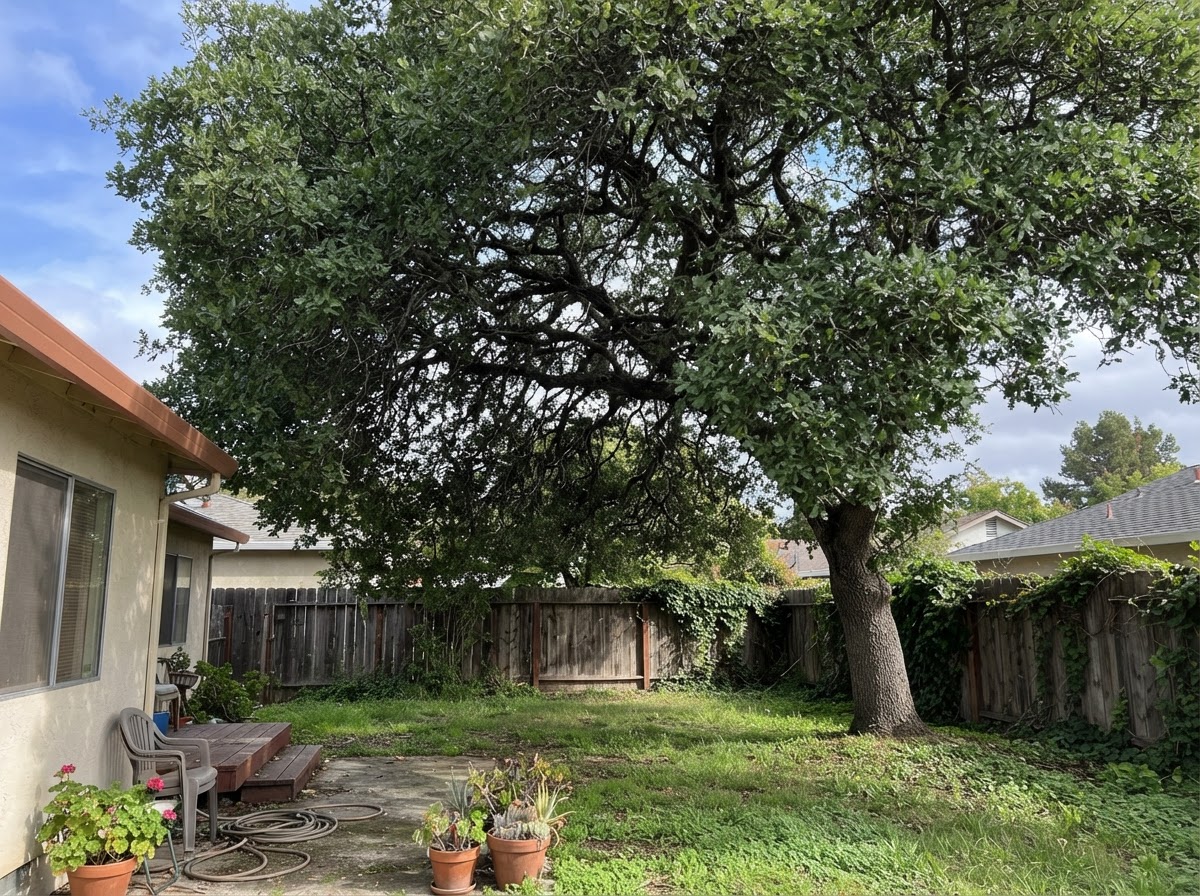
About tree pruning
Pruning is the selective removal of specific branches to guide a tree's structure, health, and long-term growth. Unlike general trimming, pruning focuses on which limbs to remove — dead wood, crossing branches, weak attachments — so the tree grows stronger over time.
Common reasons customers need this service
- Dead, diseased, or dying limbs are visible in the canopy.
- Branches cross and rub against each other.
- The tree's structure feels crowded or unbalanced.
- You want to encourage healthier, more stable long-term growth.
Typical service tasks and considerations
- Removing dead, damaged, or diseased wood.
- Cutting back crossing or competing branches.
- Thinning crowded areas to improve airflow.
- Guiding the tree's structural development.
Things to consider
Each cut changes how a tree grows, so pruning decisions matter. Removing too much at once, or cutting the wrong limbs, can weaken a tree or leave it vulnerable. Thoughtful, selective pruning protects both the tree and the property around it.
Tree Pruning FAQs
When is the best time to prune a tree?
Many trees respond well to pruning during dormancy, but the right timing depends on the species and the reason for pruning. Flowering trees, for example, are often pruned after they bloom.
Can pruning hurt a tree?
Done poorly, yes. Removing too much living canopy or making poor cuts can stress a tree and invite decay. Selective, well-placed cuts support health instead of harming it.
Need help caring for the trees on your property?
Share what you're seeing and the location of the property, and we'll help you figure out the right next step.
Request an Estimate