About tree removal
Tree removal is the complete take-down of a tree that can no longer remain safely or sensibly on a property. It may be dead, structurally failing, too close to a structure, or simply no longer wanted. Because removal is permanent and involved, it's worth understanding the considerations before deciding.
Common reasons customers need this service
- The tree is dead or in irreversible decline.
- The tree is leaning or has structural failure.
- Roots or branches are threatening a foundation, roof, or utility line.
- The tree no longer fits the property's use or layout.
Typical service tasks and considerations
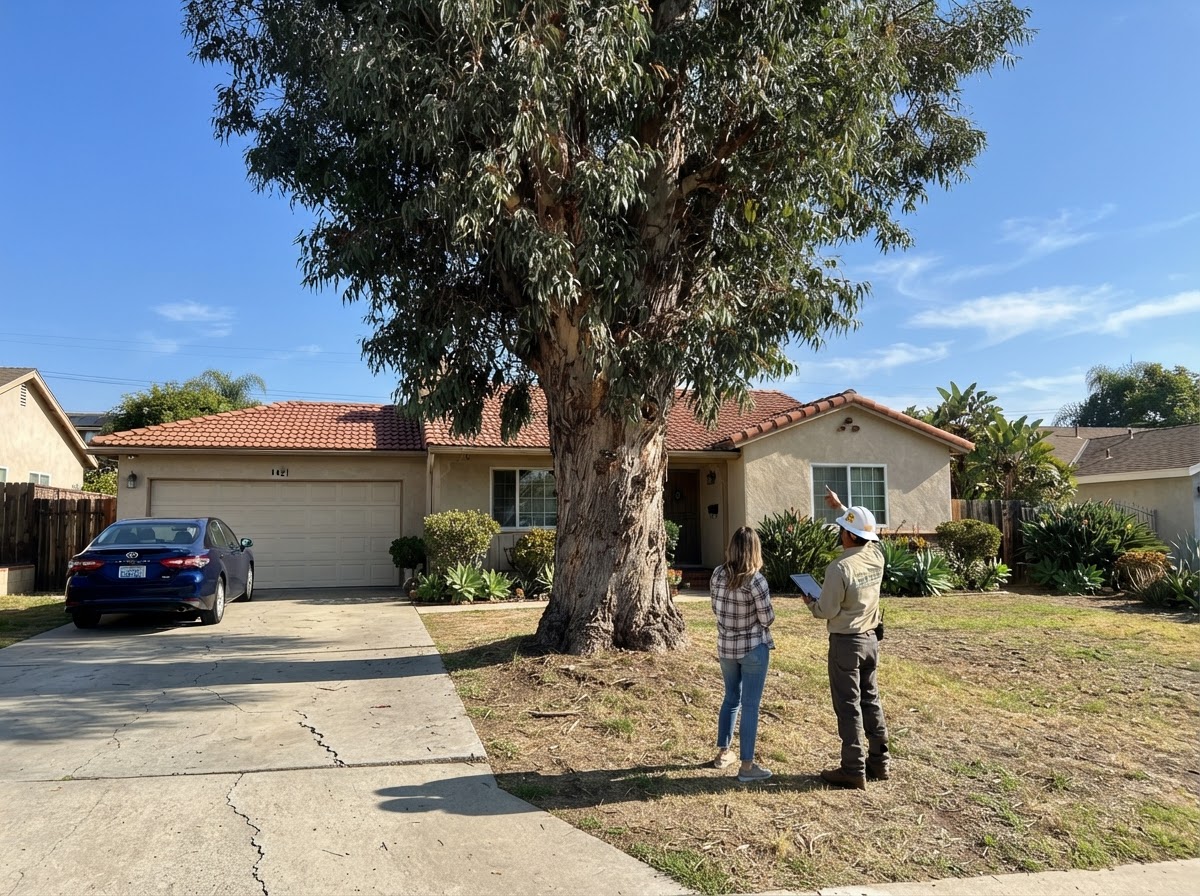
- Assessing the tree's condition and the safest removal approach.
- Taking the tree down in controlled sections.
- Lowering limbs and wood safely to the ground.
- Clearing the resulting wood and debris.
Things to consider
Removal is a significant decision. A tree that appears unhealthy may still be stable, and a tree that looks fine may have hidden issues. Understanding the tree's condition and the space around it helps determine whether removal is truly necessary or whether other care could address the concern.
Tree Removal FAQs
How do I know if a tree needs to be removed?
Signs can include extensive dead wood, a leaning trunk, large cracks, root damage, or major structural failure. A professional assessment can confirm whether removal is necessary or whether the tree can be saved.
What happens to the stump after removal?
The stump and surface roots remain unless stump grinding or removal is arranged. Many property owners choose to address the stump as part of the same project.
Need help caring for the trees on your property?
Share what you're seeing and the location of the property, and we'll help you figure out the right next step.
Request an Estimate